
Overview
The team wanted to organize the severity of alerts from an HVAC system based on groupings that would be meaningful to HVAC professionals. These professionals are difficult to recruit for research due to their limited availability and high demands on their time. As the sole researcher, I developed a closed card sort study that gained useful insights with a small sample of participants. By using a quantitative method with qualitative follow-up questions, the team learned actionable groupings of both current and future alerts.


Problem
The team needs feedback from HVAC professionals, a known challenging group to recruit, to provide useful and accurate severity categorization.
Solution
Use a method HVAC professionals can complete remotely and asynchronously to improve recruitment. A low commitment study is more likely to be completed.
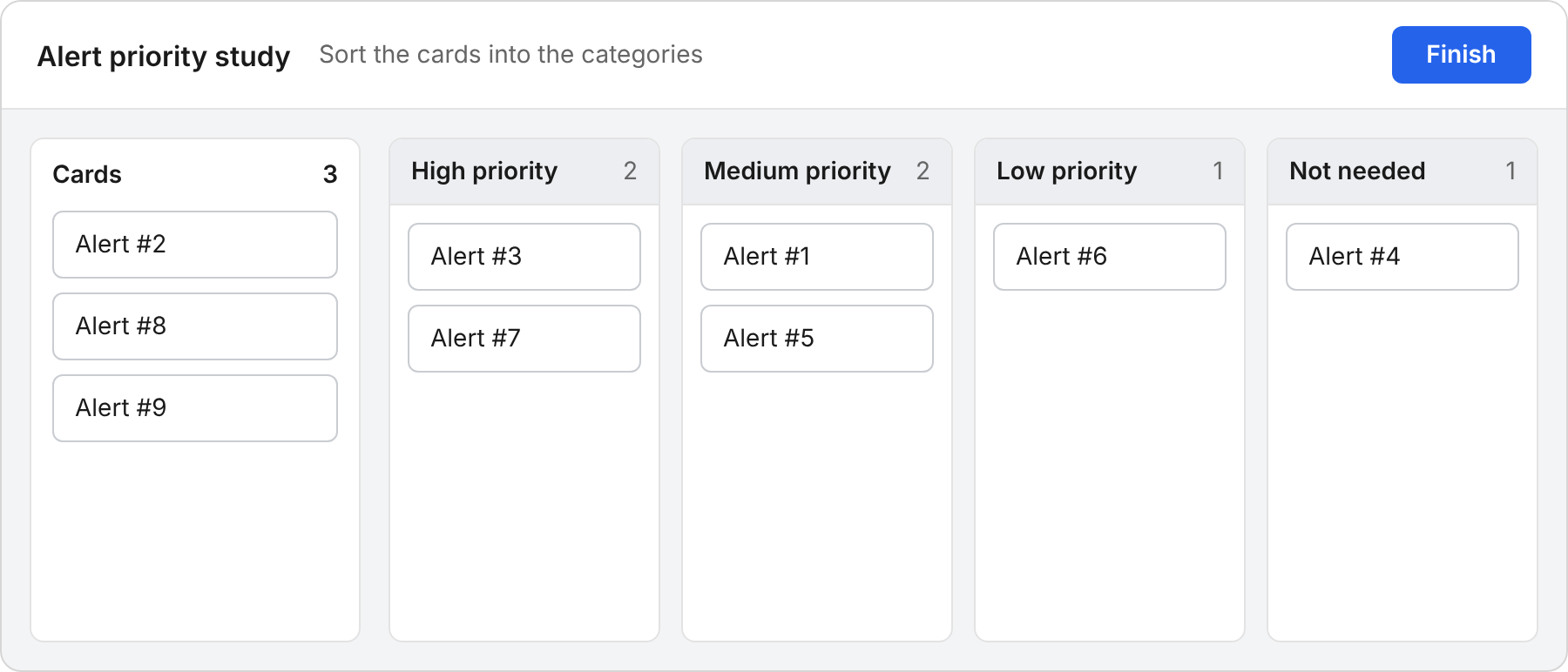
A closed card sort method accessible with a link allowed the team to learn their categorization with minimal effort from the professionals.
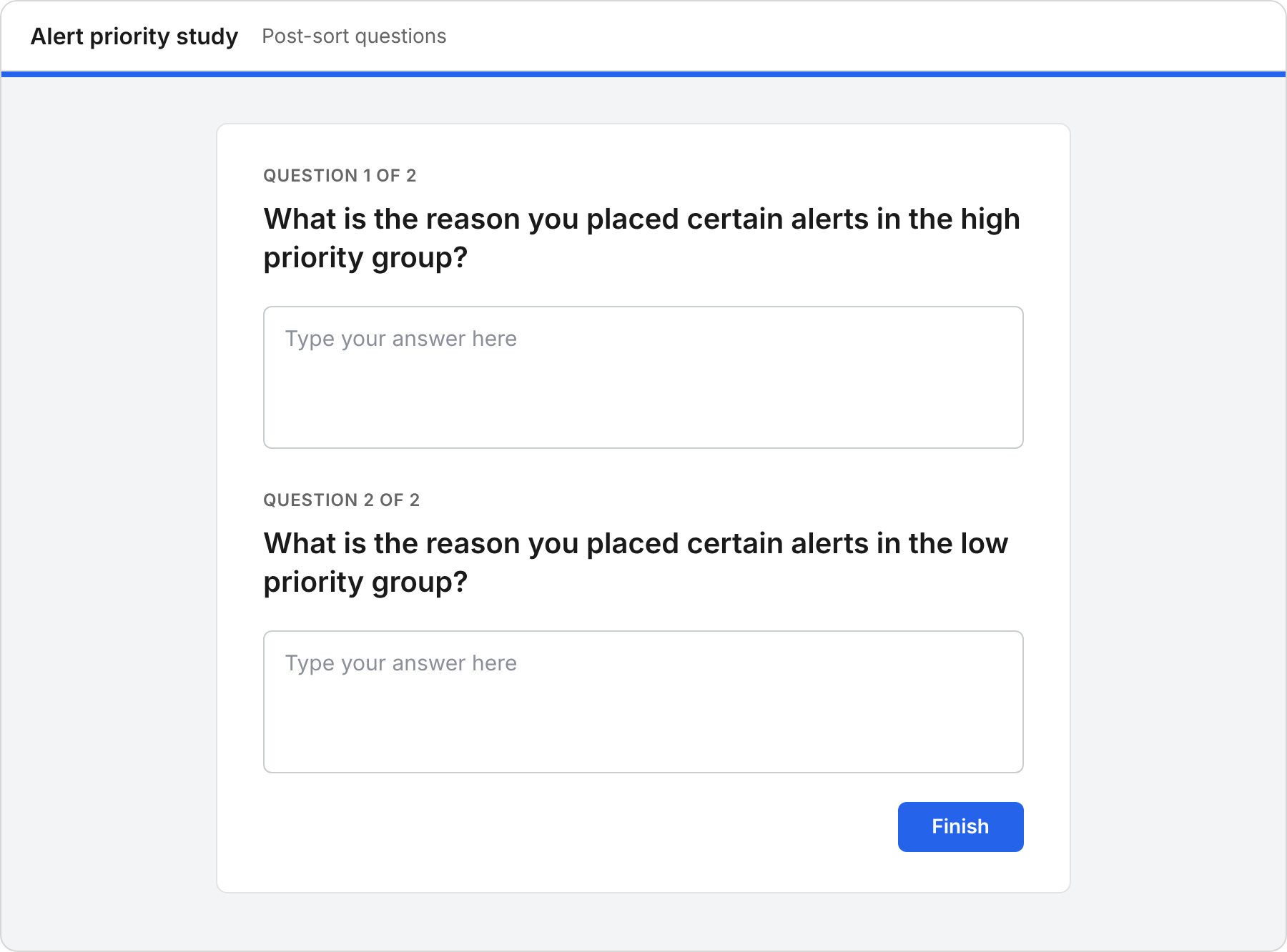
Gain the “why” or reasoning for their groupings from a few short answer questions following card sort
Questions such as “What is the reason you consider the alerts in the high severity category as high in severity?” allowed the team to understand the professionals reasoning behind their groups, allowing for more knowledge of the types of alerts professionals value and find timely.
Closed Card Sort
Qualitative Questions
Outcome
12 of HVAC professionals were recruited
Most professionals agreed on the severity of various HVAC system alerts.
The qualitative data allowed the team to understand the reasons alerts are considered severe or not severe by these professionals.
This qualitative data can help the team classify alerts that were placed equally into multiple categories and HVAC alerts that are developed in the future and were not a part of this study.
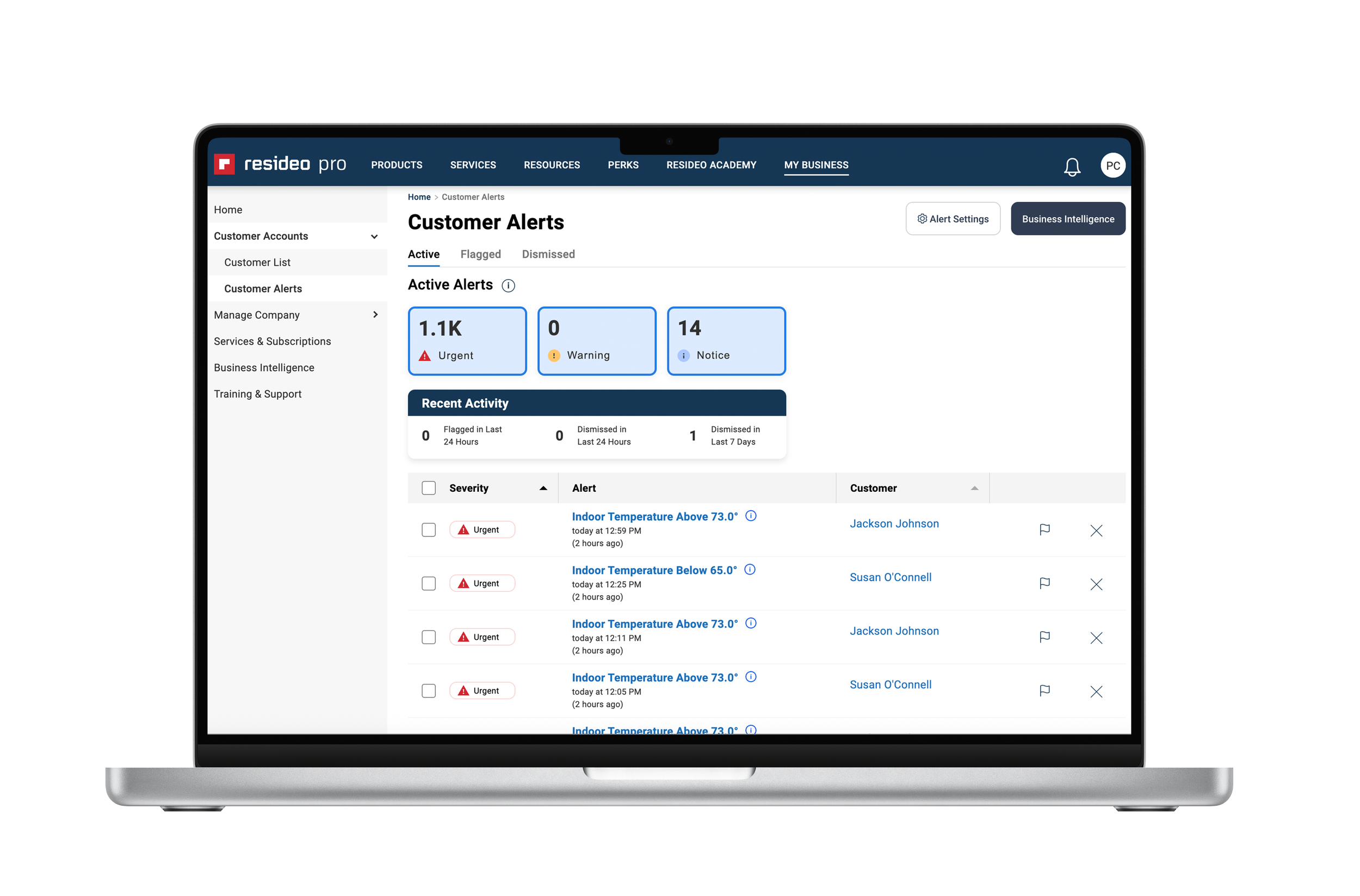
The alert classification was used to designate alert severity for a professional services software.